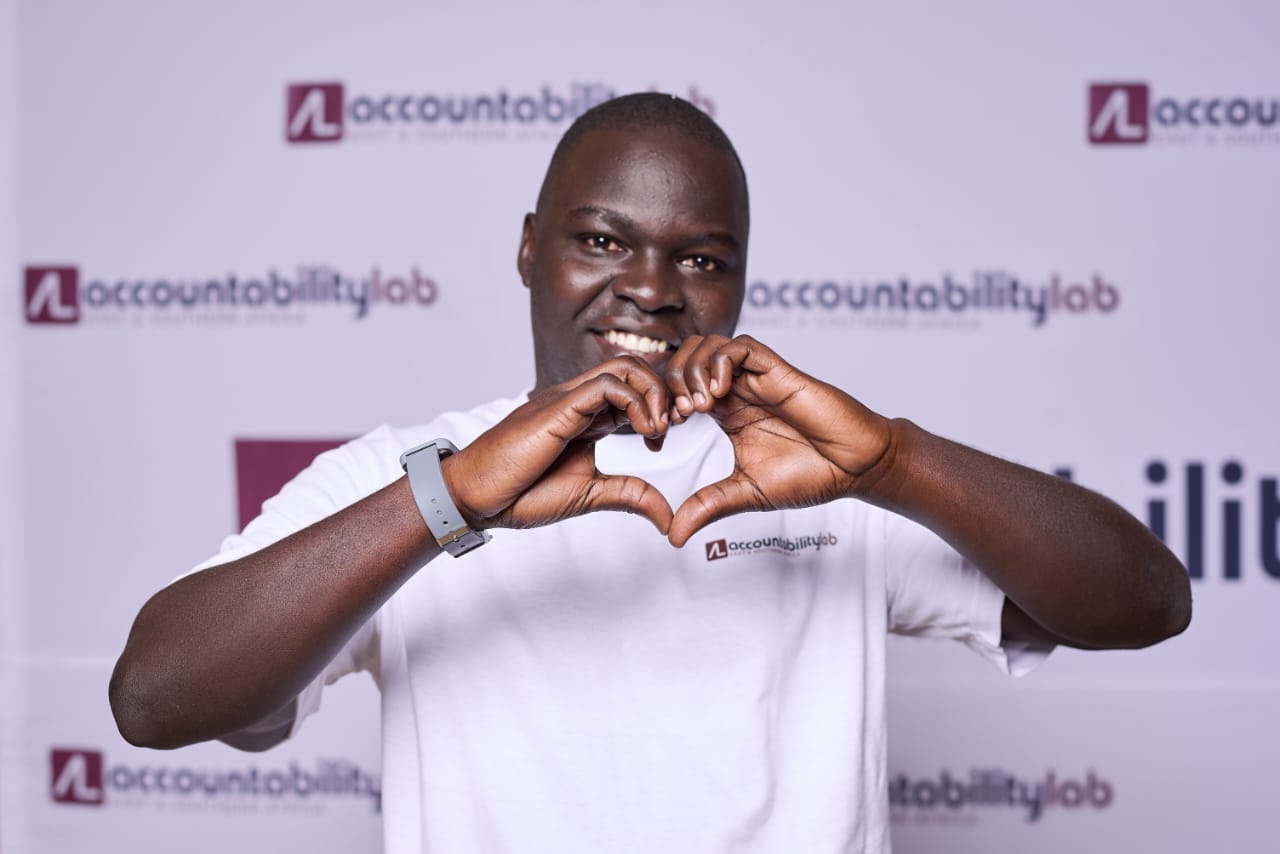
I lost my hearing at the age of 13 years old, I was then already in high school, and I was in senior one studying at Lango College, located in Lira District, Northern Uganda. Before that, I was born to hearing parents and grew up like any other normal child – listening, playing, speaking, and interacting freely with everyone and my first language was Lango, which I learnt mostly from my mother while interacting with her, and plus a couple of kids around the neighborhoods during playing time. I vividly remember simple words like “binn” meaning “come.” I learned mostly through play, conversations, and everyday interaction with people around me. So, just like many young children growing up, I was able to develop the Lango language naturally.
When I reached age big enough to join the school, I was made to join a nearby primary government owned school to start my primary education, we were first taught in our local language by the teachers before transitioning to English and at school, I was able to interact with my fellow age-mates hence learning more from them so I learnt different local words which made it easier for me to translate concepts and build understanding. Over time, I became fluent in English language reading, writing, and using advanced vocabulary and looking back, I realize that this early exposure gave me a strong foundation in language acquisition. But today, I ask myself: what happens to Deaf children who never experience this foundation?
A Classroom Reality
In class, where I work, one day, while teaching English to Deaf children, I encountered a difficult moment and deep down, I keep wondering how Deaf children cope up in class, like what shapes their thinking and participation. That day the topic was pronouns; pronouns are words that stand in for nouns, but what seemed simple quickly became complex as it became a hard hurdle to navigate because the Deaf children were repeating themselves and the learners struggled to understand and construct sentences yet these were not very young children; they were already older, yet basic comprehension remained a challenge. That moment took me back to early childhood development and it is evident that Deaf children are not exempt from these stages-but many are denied access to them.
The Communication Gap at Home
In Uganda, many Deaf children are born to hearing parents but unfortunately, most of these parents do not know Ugandan sign language as some of them are unaware of its importance, while others are limited by busy schedules or economic pressures; yes, even in my own life, my parents do not know Ugandan sign language and we barely communicate with the exception of writings, and this really creates a wide communication vacuum especially during the most critical years of language development for the Deaf child. For over the past five years, through my initiative, Sign Language for All, a not-for-profit initiative that is cascading Ugandan sign language training and awareness, we have trained more than 500 people in Ugandan sign language. Yet, I have only encountered two or three parents of Deaf children willing to learn it to communicate with their own children and this really keeps wondering: What is the fate of the over 800,000 Deaf children in Uganda?
A Broken Education System?
In classrooms, teachers are doing their best. But can they really do it alone? Deaf children often struggle with reading, writing, and comprehension – not because they are incapable, but because they missed early Ugandan sign language exposure and acquisition, but we must ask ourselves difficult questions: Have we given up on the old system? Are Deaf children included in the promise of quality education? Where are the advocates of United Nations Sustainable Development Goal 4, which calls for inclusive and equitable education for all? Or does “for all” exclude Deaf children?
Understanding the Language Challenge
Ugandan sign language is a complete language with its own grammar and structure. For example, in English we say, “What is your name?” And is signed in Ugandan Sign language as “Your name what” So, a Deaf child naturally thinks in sign language and when writing, they may transfer this structure into English. This is often misunderstood as poor writing or poor grammatical expression in English, yet it is simply a difference in language systems and so, without proper support and reforms, this gap continues and persists into adulthood hence many Deaf individuals grow up struggling to:
-
Express themselves clearly in writing and end up missing a lot of opportunities in fellowships, they become accused and blamed in one way or another, yet no one understands them.
-
Access employment opportunities where they can’t write job application and write CVs.
-
Pursue higher education and explore potential career pathways in the world of work.
The world, unfortunately, is not designed for them so their dreams fade, they are misunderstood, they become excluded as well as oppressed by the system and as a result their ambitions shrink and potentials are lost.
What Can Be Done?
The situation is not hopeless at all but there are practical solutions; some of which I have tested myself and proven to works but all this needs patience, understanding, and resources to make it possible but it is capable to bringing the desired change and challenge the old system as well as the tradition.
1. Bilingual Learning (Sign–Picture–Word): This involves simultaneous usage of both Ugandan sign language and English as a medium of instructions using learning realia like the charts or flashcards that combine signs, pictures, and written words helps learners connect meaning effectively. I have used and experimented this approach, and it works but the challenge is that it needs more time, more resources, and implementation of the Individualized Educational Plans -IEP where each Deaf child is given individual attention based on their strengths and weakness but also incorporating Universal Design for Learning concept helps alot. In developed countries like United States of America, the approach is already working. And, often, a Deaf child can sign a word perfectly but cannot fingerspell or write it so this method bridges that gap.
2. Ugandan Sign Language Video Learning: Here we use Ugandan sign language video tutorials that integrate Ugandan sign language, texts or captions, and voice-overs which in long run enhances understanding as well as sentence construction. In Kenya and Rwanda, organizations like eKitabu are already using digital sign language storybooks with success so Uganda can learn from such models and implement it.
3. Explicit Vocabulary Teaching: Here the trained professional and qualified teachers should go beyond basic instruction by explaining meanings clearly in a simple, clear, and understandable for, teaching related words and opposites throughout the instructions, and lastly by demonstrating usage in real contexts. And this calls for designing a simplified curriculum and teaching pedagogy designed for Deaf children or learners.
4. Learning Beyond the Classroom: Through real-life experiences – such as market visits or farm visits will help Deaf learners connect words to real meaning. Since, Deaf learners learn mostly by visualization and photogenic memories.
5. Parental Involvement: Parents must be part of the solution, so learning Ugandan sign language is not optional and it is essential since parents are the first contacts of Deaf children since Deaf children spend more time with their parents during holidays and parents are 100% involved in the lives of the Deaf children. And Sign Language for All has always been at the front of training Ugandan sign language to the communities in Uganda.
6. Investment in Inclusive Education: Inclusive education especially Deaf education requires commitment from all the eco-system actors, more trained and qualified Ugandan sign language teachers, better learning materials aids like books, and realia, increased funding for grants, projects, and research into Deaf education, and lastly stronger partnerships with organizations in the field of inclusive education with strong focus on Deaf education for the children.
A Shared Responsibility
Educating Deaf children is not the responsibility of teachers alone, it is a collective effort involving parents of Deaf children, school administrators, government, organizations, and communities and it becomes our responsibility to rethink our systems, shift our narratives, and change our perspectives.
A Call to Action
To the organizations both local and international, policymakers, and advocates of inclusive education: What more can we do together? Who is accountable when the system fails Deaf children? How do we ensure no child is left behind? And yes, Deaf children can achieve excellence and be able to read, write, and thrive but only if we give them the chance.
Alex Ogwal, Deaf Accessibility Consultant,& Special Needs Teacher. Email: alexogwal2017@gmail.com WhatsApp: +256 759 463 229